


Threads finally gave users a way to say what they want more of, and that makes Dear Algo more important than it looks. For brands, this is not about “beating” the algorithm. It is about shaping a short burst of visibility with preference-based posts people may reuse, repost, and reinforce. In 2026, that makes the Threads Dear Algo feature less of a gimmick and more of a practical reach lever for brands that know how to use it well.
What is the Threads Dear Algo feature and what does it actually change?
Dear Algo is a Threads feature that lets users make a public post telling the algorithm what they want to see more or less of, and Meta says that preference affects their feed for three days.
Meta also says users can repost someone else’s Dear Algo request to apply that preference to their own feed.
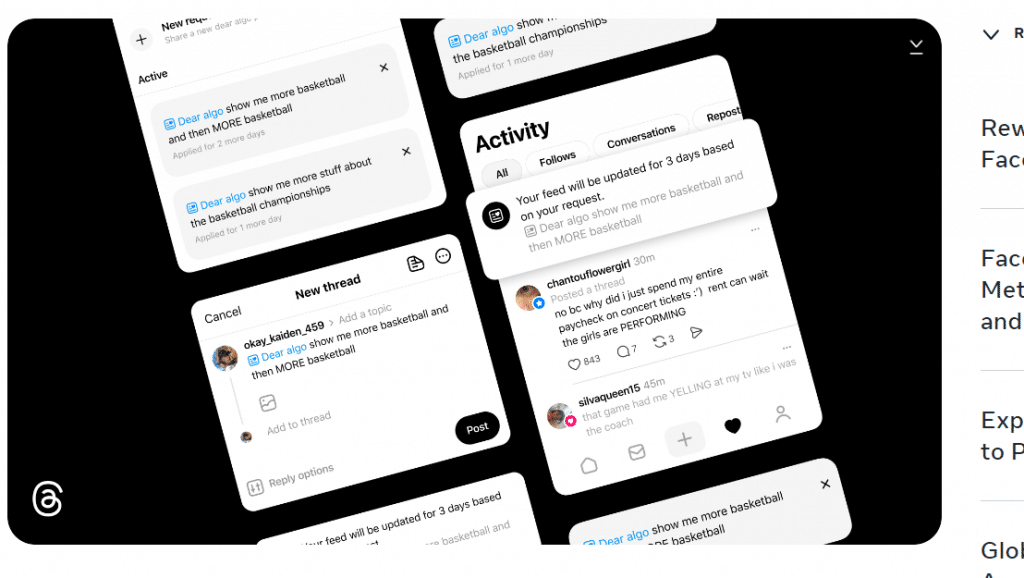
That is a bigger change than it sounds like.
For years, brands have tried to reverse-engineer opaque ranking signals. Dear Algo adds a new layer. It turns preference into something people can state directly, briefly, and publicly. That means reach is not only about engagement anymore. It is also about whether your topic framing is easy for people to adopt.
The practical shift looks like this:
- Old game: post and hope the algorithm infers the audience
- New game: help the audience tell the algorithm what they want
- Smarter game: create content themes people borrow through reposted preference posts
That last one is where brands should pay attention.
Why does Dear Algo matter for brands and local businesses in 2026?
Dear Algo matters because it gives brands a visible way to align with what people are actively asking Threads to surface right now. Meta says the feature is designed for “what’s important to you in the moment,” including live events, niche interests, and timely conversations.
That makes it useful for businesses whose content depends on timing, geography, or recurring category interest.
A few examples make this clearer:
- A Phoenix realtor can shape content around “show me more Phoenix housing updates, desert landscaping ideas, and first-time buyer tips.”
- A Chicago caterer can lean into “show me more wedding menu ideas, event planning checklists, and Chicago venue inspiration.”
- A Dallas gym can work around “show me more strength training tips, Dallas fitness events, and healthy meal prep.”
Notice what all three have in common. They are not begging for brand exposure. They are packaging a useful preference. That is the move.
People do not usually repost “show me more posts from our company.”
They will repost “show me more practical home-buying advice in Phoenix.”
That difference matters.
How do you use Dear Algo on Threads without sounding desperate?
Use Dear Algo to describe the content category people want, not the brand you want them to notice. Meta says users type “Dear Algo” in a public post and then specify what they want more or less of. The examples Meta and media coverage use are topic-based, not brand-based.
A good Dear Algo post usually has three traits:
- it is specific
- it is useful
- it sounds like a real person’s preference
A weak post sounds promotional:
- Dear Algo, show me more of our product drops
- Dear Algo, put our agency in front of more marketers
A stronger post sounds adoptable:
- Dear Algo, show me more honest Threads growth experiments from small brands
- Dear Algo, show me more restaurant marketing ideas that actually work in Chicago
- Dear Algo, show me more no-fluff Threads tips for local businesses
That is the main mindset shift.
Write for adoption, not applause.
How do you write a Dear Algo post that other users will copy and repost?
The best Dear Algo posts make people think, “Yes, I want that in my feed too.” Meta says reposting a Dear Algo post applies those preferences to the reposter’s feed, so the more reusable the wording, the more distribution power the post can gain.
Here are the wording patterns that usually work better:
1. Problem-first wording
- Dear Algo, show me more practical ecommerce fixes and less recycled growth advice
- Dear Algo, show me more real local SEO examples and less generic “marketing tips”
2. Topic-plus-audience wording
- Dear Algo, show me more Threads strategy for creators, consultants, and local brands
- Dear Algo, show me more content about first-time buyers in Austin and less luxury-only real estate
3. Timely-interest wording
- Dear Algo, show me more March tournament takes from college basketball fans
- Dear Algo, show me more launch-week reactions from SaaS founders
4. Utility wording
- Dear Algo, show me more checklists, case breakdowns, and content that teaches something fast
- Dear Algo, show me more posts with examples, not opinions with no proof
A quick rule: if the line sounds like something a normal user would genuinely want, it has a chance. If it sounds like campaign copy, it dies.
What wording patterns make preferences feel useful instead of self-promotional?
Useful Dear Algo posts ask for a category of value. Self-promotional ones ask for attention. Threads users are far more likely to adopt the first kind. Meta’s own framing centers on helping people find relevant conversations and tune recommendations around what matters in the moment. (About Facebook)
Use this simple filter before posting:
| Ask yourself | Good sign | Bad sign |
| Would a stranger repost this? | Yes, it improves their feed | No, it only helps your brand |
| Is it narrow enough? | Clear topic or audience | Broad, vague, generic |
| Does it imply value? | Tips, updates, examples, insights | “See more of me” language |
| Does it fit 3 days? | Timely or testable | Meant to be permanent |
Strong examples:
- Dear Algo, show me more honest agency lessons and less fake overnight wins
- Dear Algo, show me more Dallas small-business marketing ideas that don’t require huge budgets
- Dear Algo, show me more creator business advice with screenshots and examples
Weak examples:
- Dear Algo, boost my posts
- Dear Algo, show everyone my brand
- Dear Algo, help us go viral
The second group feels needy. The first group feels useful.
What new metrics should brands track when Dear Algo only influences the feed for three days?
Treat Dear Algo like a 72-hour distribution experiment, not a long-term brand KPI.

Meta and reporting from The Verge and Android Central both state that the preference effect lasts for three days, which means measurement windows need to be short and intentional.
The metrics that matter most are the ones closest to discovery and intent:
- profile taps
- follows
- saves
- reposts
- replies from non-followers
- topic-adjacent post performance during the same 72 hours
A simple test table helps:
| Goal | Post type | Metric | Best window |
| More discovery | Dear Algo preference post | Reposts, profile taps | 24 to 72 hours |
| More authority | Follow-up insight post | Saves, replies | 24 to 72 hours |
| More audience fit | Local or niche post | Follows, non-follower engagement | 72 hours |
| More conversion intent | Soft CTA post after preference post | Link clicks, DMs, lead actions | 48 to 72 hours |
Do not obsess over raw impressions alone. Dear Algo is more useful when it improves who sees you, not just how many people do.
What mistakes make Dear Algo backfire or do nothing?
The biggest mistakes are being too broad, too salesy, or too disconnected from the content you publish next. Meta says Dear Algo is about what is relevant “in the moment,” and external reporting notes users can reinforce long-term preference only by continuing to interact with the content they asked for.
The common failure sequence looks like this:
- Brand posts a vague preference
- Preference gets little adoption
- Follow-up content does not match the preference anyway
- The 3-day window expires with no pattern reinforcement
Watch out for these:
- “Show me more business content” is too broad
- “Show me more of our product” is too promotional
- asking for a category you never publish about
- using one Dear Algo post with no support content after it
- copying another account’s phrasing without fitting your audience
The fix is simple:
- choose one niche
- define one useful preference
- support it with two or three related posts inside 72 hours
That is where the lift compounds.
Does Dear Algo actually work, or is it just another social media toy?
It appears to work as a temporary feed influence tool, but not as a magic reach button. Meta says it changes the feed for three days. The Verge reports that long-term change still depends on interacting with the content category you requested, and Business Insider notes the feature can be deleted and reused, suggesting it is a flexible but temporary preference layer rather than a permanent override.
That means the truth is somewhere in the middle:
- yes, it can shape visibility
- no, it does not replace strong content
- yes, repost adoption makes it more interesting for brands
- no, it is not a shortcut around audience fit
The smarter way to think about Dear Algo is this:
it is not a hack for weak content.
It is an amplifier for well-packaged intent.
What should a 7-day Dear Algo experiment look like for a brand?
A strong first test uses two Dear Algo posts, three support posts, one local or niche post, and one recap post. That gives you one full week of learning without overcomplicating the signal. The 3-day preference window reported by Meta and media coverage is exactly why a 7-day sprint makes sense.
Here is a clean plan:
Day 1
Post Dear Algo version A
Example: “Dear Algo, show me more no-fluff Threads growth lessons for local businesses.”
Day 2
Post a proof-based follow-up
Example: one lesson from a recent campaign, one screenshot, one takeaway
Day 3
Post a niche or local angle
Example: “What Phoenix realtors are posting that actually earns replies”
Day 4
Post Dear Algo version B
Refine the request based on Day 1 response
Example: “Dear Algo, show me more local marketing examples with real results, not recycled tips”
Day 5
Post a community-building thread
Ask a question tied to the preference topic
Day 6
Post a short opinion or myth-busting post
Stay aligned with the requested category
Day 7
Post a recap
What got the best replies, saves, follows, or reposts
This works especially well for local GEO-driven brands:
- Phoenix realtors
- Chicago caterers
- Dallas gyms
- Miami med spas
- Seattle coffee brands
- Toronto interior designers
The tighter the audience and context, the easier it is to write preference language people actually want in their feed.
Final take
Threads Dear Algo is a new growth lever because it gives brands something they almost never get on social platforms: a visible way to shape recommendation input. Meta is very clear that the feature is temporary, topic-based, and shareable through reposts. That combination is exactly why smart brands should treat it seriously.
The opportunity is not to beg the algorithm.
It is to write a better request than your competitors.
The brands that win with Dear Algo will not be the loudest. They will be the ones that understand a simple truth: people adopt preferences that improve their feed, not posts that improve your ego.
So build Dear Algo posts people want to borrow. Then publish the follow-up content that proves they were right to adopt it.
That is a much smarter growth strategy for Threads in 2026 than posting another generic tip thread and hoping the feed is in a good mood.
Curated by Lorphic
Digital intelligence. Clarity. Truth.