
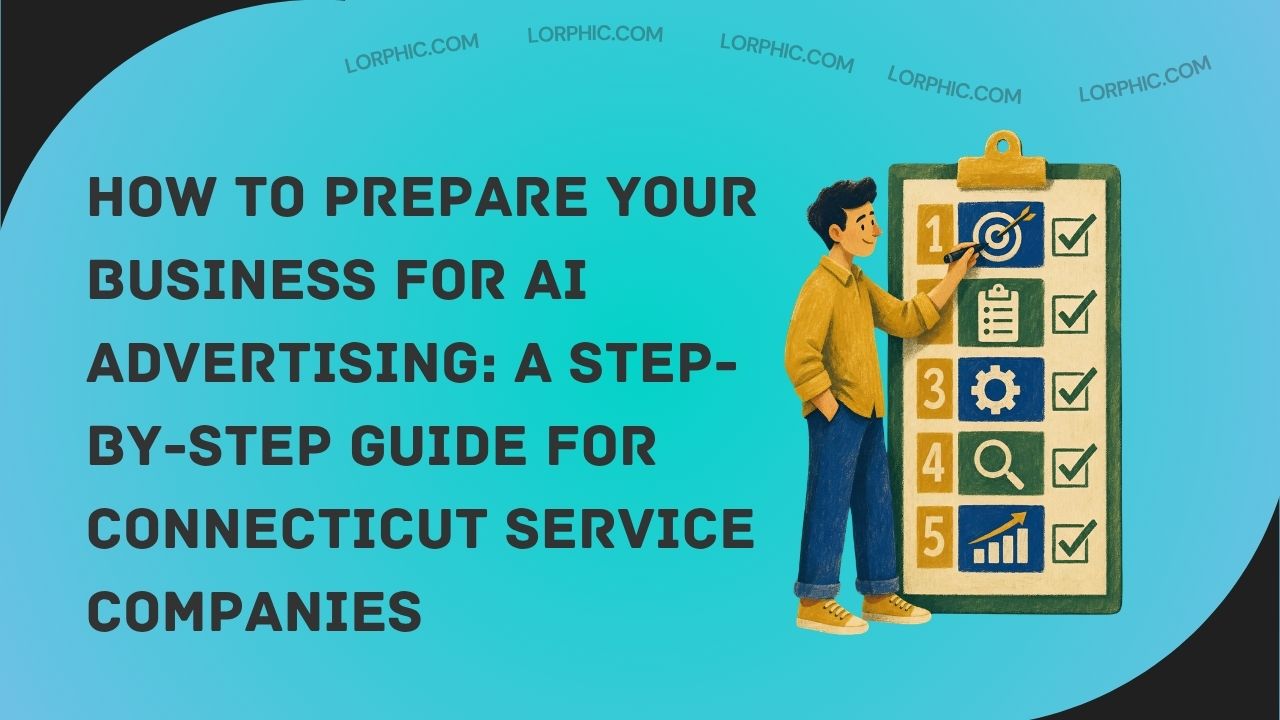
How to prepare your business for AI advertising is the step most coverage of ChatGPT Ads and Sponsored Agents skips. What a Fairfield law firm, a Greenwich financial adviser, a West Hartford dental practice, or a Bristol contractor actually needs in order before the first ChatGPT Ad goes live is not in the launch announcements. This guide works through that preparation: the website, the tracking, the business information, and the test structure that makes spend produce readable results.
Key Takeaways
- Prepare your business for AI advertising is different for the two available formats: standard ChatGPT Ads can be tested now after a focused website and tracking review, while Sponsored Agents also require that the business information the agent draws from is accurate and current
- A Sponsored Agent is built from the business’s existing information OpenAI’s terms place responsibility for the content and accuracy of agents on the advertiser, so outdated pricing, old services, or incorrect location details become the agent’s answers
- Conversion tracking is the prerequisite that makes any new ad channel testable: without it, there is no way to know whether a campaign produced a lead or simply spent money
- The website does not need to be redesigned before testing ChatGPT Ads, but it does need to load quickly on a phone, clearly state what the business does and where, and make it easy for a visitor to contact the business in one step
- Google Business Profile accuracy matters for AI advertising because ChatGPT and other AI systems draw from publicly available information, including GBP data, when generating organic answers alongside paid ads
- Testing a new ad channel well means setting a specific budget, a specific time window, and a specific metric before the campaign starts not evaluating performance after the spend has happened
How to Prepare Your Business for AI Advertising: Two Formats
Standard ChatGPT Ads and Sponsored Agents have different preparation requirements, and understanding which applies to the business right now saves time.
Standard ChatGPT Ads are available to businesses at ads.openai.com. The preparation requirements are similar to those for any new ad channel: a website that converts, conversion tracking in place, and a clear sense of what the campaign should accomplish. Access is open.
Sponsored Agents are in limited alpha testing as of November 2026, with select US advertisers that OpenAI invited into the pilot. Most businesses cannot run them yet. The preparation requirements go further than standard ads because the agent needs accurate business information to function correctly. OpenAI has stated it will announce when access expands.
The sections below cover both. Steps 1 through 3 apply to standard ChatGPT Ads now. Steps 4 and 5 add the Sponsored Agent-specific preparation that makes sense to do in parallel, so the business is ready when access opens.
Step 1: Website Review for AI Advertising Readiness
An ad on any platform sends the visitor somewhere. For ChatGPT Ads that destination is the website, and for Sponsored Agents the conversation ends with a click to the site. If the site does not convert, the spend does not either.
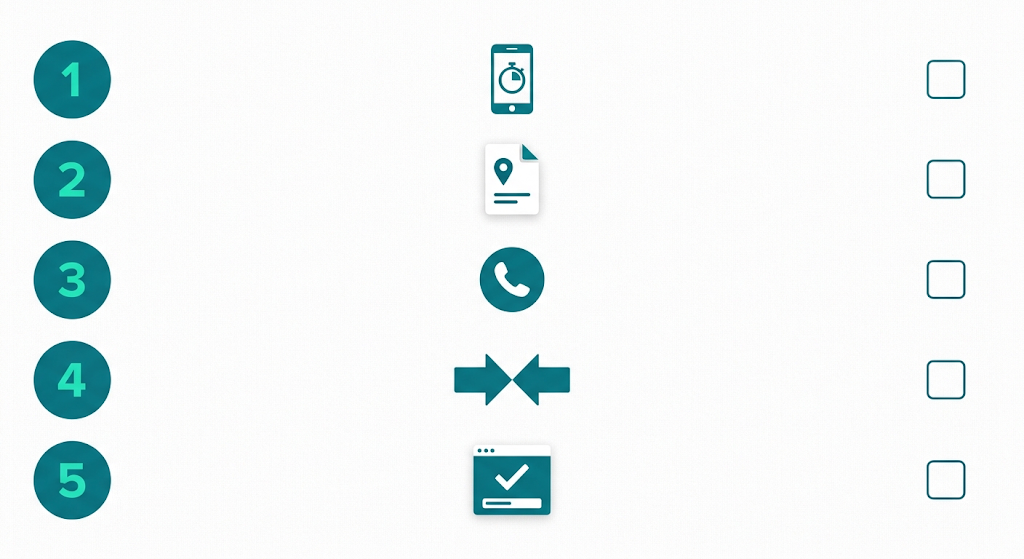
Five things to check on the website before running ChatGPT Ads:
Load speed on a phone. Most local service customers search on mobile. A page that takes more than three seconds to load on a 4G connection loses visitors before the content appears. Check the site using a free tool or by opening it on a phone on a standard mobile connection, not a home Wi-Fi network.
A clear description of what the business does and where. A visitor who lands on a page that says “Welcome to [business name]” without immediately knowing what service is offered and what area is served has to work to understand whether the business is relevant. The first screen should answer both questions without scrolling.
One clear contact method above the fold. A phone number that is visible immediately on mobile, a contact form that works without redirecting, or a booking button that opens directly one of these needs to be reachable without the visitor having to scroll, search, or navigate to a separate page.
Service pages that match what the ad covers. If a ChatGPT Ad promotes furnace repair, the page it lands on should be about furnace repair, not the general HVAC homepage. The match between ad intent and landing page content affects both the visitor’s experience and the ad’s performance.
A thank-you page or confirmation after contact. This is the most practical tracking requirement. If a visitor submits a contact form and lands on a confirmation page at a unique URL, that URL can be used as a conversion event in tracking. Without a confirmation page, form submission tracking requires more complex setup.
Step 2: Conversion Tracking Setup
Conversion tracking is the prerequisite that makes any new ad channel testable. Without it, there is no way to know whether a campaign produced a lead, a call, or a booking only whether it spent money.
For a business that already runs Google Ads with working conversion tracking, the infrastructure needed for a ChatGPT Ads test may already be mostly in place. ChatGPT Ads reporting is separate from Google Ads, but the same events form submissions, phone clicks, confirmation page visits that are tracked for Google can be measured for ChatGPT Ads with appropriate setup.
For a business that has not set up conversion tracking before, the minimum viable setup covers:
- Form submission tracking: a Google Analytics 4 key event that fires when a visitor submits the contact form or reaches the thank-you page
- Phone click tracking: a GA4 event that fires when a visitor taps the click-to-call number on a mobile device
- Call tracking number (if applicable): a forwarding number that records whether a call came from a specific ad source
The specific setup method depends on the website platform. WordPress sites using Google Tag Manager can set up these events without editing code. Wix, Squarespace, and Shopify each have their own analytics integration paths.
For a West Hartford dental practice or a Bristol home services company testing a new channel, the tracking question is not optional.
Step 3: Business Information Accuracy Check
This step is specifically important for Sponsored Agents but also matters for standard ChatGPT Ads, because ChatGPT generates organic answers about businesses using publicly available information including the Google Business Profile, the website, and directory listings.
A business that runs a ChatGPT Ad alongside an inaccurate or incomplete organic presence sends mixed signals. The ad may appear, the user may then ask ChatGPT about the business directly, and the organic answer may contain outdated or incorrect information.
Three places to verify accuracy:
The Google Business Profile. Hours, service area, categories, services listed, photos, and the business description should reflect what the business currently offers. A Greenwich law firm that added a new practice area or a Fairfield contractor that stopped offering a particular service should update the GBP to match. Our Google Business Profile optimization guide covers each field that matters.
The website’s service pages. Each service page should accurately describe the current offering, pricing approach (even if it is “contact for a quote”), and geographic area served. Pages built for services the business no longer offers should be updated or redirected.
Key directory listings. The business name, address, and phone number should match exactly across Google, Yelp, Bing, Angi, and the local chamber of commerce listing. Inconsistencies in these core details affect how AI systems reference the business in organic answers.
Step 4: Sponsored Agent Content Preparation
This step applies specifically to Sponsored Agents and can be done now even though access is not open to most businesses.
According to OpenAI’s terms as reported by Floodlight, advertisers carry responsibility for the content, configuration, and output of their agents. An agent trained on a business’s website will give answers based on what the website says. If the website has incomplete service descriptions, vague pricing language, or outdated information, those gaps become the agent’s answers.
The agent readiness review covers three areas:
Common customer questions. Write out the ten questions the business most frequently gets from first-time callers or enquirers: pricing, turnaround time, service area, what the process involves, what distinguishes the business, payment options, emergency availability. For a Bristol HVAC company, these might include “do you service my town,” “how quickly can you come for an emergency,” “what does a maintenance visit include,” and “do you offer any kind of service plan.” The agent will need to answer these from the website content. If the answers are not on the website, the agent will give incomplete responses.
Service accuracy. Each service the business offers should have its own clear description on the website that specifies what is included, what is not, how to book, and what happens after booking. Vague descriptions like “quality service at competitive prices” do not give an agent useful content to draw from.
Geographic specificity. The agent needs to know which towns and areas the business serves. A service area page or a list of served towns within each service page helps both the agent and standard search. For a business that serves specific zip codes or towns in Fairfield County or Hartford County, that specificity should be on the site.
How to Prepare Your Business for AI Advertising: Final Checklist
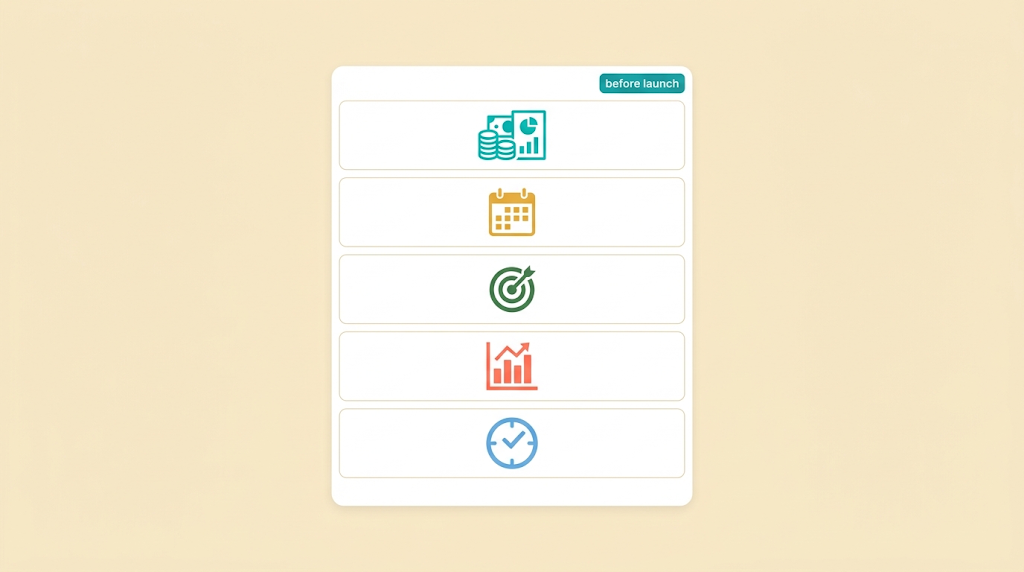
A single reference checklist combining all five steps.
Before running standard ChatGPT Ads:
- Website loads in under 3 seconds on mobile
- Homepage clearly states the service and location without scrolling
- One visible contact method on every page
- Service pages match the services being advertised
- Thank-you or confirmation page exists after form submission
- GA4 key event set up for form submissions
- GA4 key event set up for phone clicks
- GBP hours, service area, and categories are current
- Website service pages reflect current offering
- Business name, address, phone number consistent across top directories
Before configuring a Sponsored Agent (when access opens):
- All items above are complete
- Ten most common customer questions are answerable from the website
- Each service has a dedicated page with specific detail
- Service area is explicitly listed with town or zip code coverage
- No services listed on the site that the business no longer offers
FAQs
How do you prepare a business for AI advertising?
Business for AI advertising covers five areas in order: reviewing the website for speed, clarity, and a clear contact method; setting up conversion tracking so results are measurable; confirming that the Google Business Profile and service pages are accurate; preparing the content an agent would draw from if running Sponsored Agents; and structuring the test with a defined budget, time window, and metric before the campaign starts.
What does a business need before running ChatGPT Ads?
A website that converts visitors to contacts, a clear confirmation page or event that can be tracked as a conversion, and a GA4 property set up to record form submissions and phone clicks. Without these, the campaign will spend money without producing data that tells the business whether it worked.
What does a Sponsored Agent need to function correctly?
Accurate, current information on the website that covers the common questions customers ask services offered, areas served, typical process, and how to book. According to OpenAI’s terms, the advertiser is responsible for the content and accuracy of the agent. If the website has outdated pricing or incomplete service descriptions, the agent’s answers will reflect those gaps.
Does the website need to be rebuilt before testing ChatGPT Ads?
No. The website needs to be functional, fast on mobile, and clear about what the business does. A simple site that loads quickly and has an obvious contact method is a better starting point than a complex, slow one. The goal before a test is not a redesign it is removing the specific friction points that cause visitors to leave without contacting the business.
How long should a ChatGPT Ads test run?
At minimum 30 days, and preferably 60 to 90 days for a local service business where the journey from first contact to booked job may take a week or more. Evaluating too early produces conclusions based on too little data. Setting a specific review date before the campaign launches prevents the test from running indefinitely without evaluation.
Can a business run ChatGPT Ads and Google Ads at the same time?
Yes, and for a first test, keeping both running simultaneously produces cleaner data than pausing Google Ads. The goal is to see how ChatGPT Ads performs alongside existing channels, not in isolation. The same conversion tracking infrastructure that records Google Ads results can record ChatGPT Ads results for a direct comparison.
Conclusion
Business for AI advertising is not a large project for most Connecticut service businesses, the five steps above take a few days to work through, not a few months. The website review, the tracking setup, and the information audit each have a clear end state: the site works on mobile, tracking fires correctly, and the content that an agent might draw from is accurate. That foundation applies to every ad channel, not just ChatGPT Ads.
For Connecticut businesses in Fairfield, Greenwich, West Hartford, Bristol, and surrounding areas, Lorphic’s Google Ads management, Google Business Profile optimization address the core preparation. The full context for how AI is changing advertising is in our advertising in AI chatbots guide. Current options are at lorphic.com/deal.
Curated by Lorphic
Digital intelligence. Clarity. Truth.