

Meta Muse Wonder is a family of 2 frontier AI models, Muse Wonder and Muse Wonder Full, that Meta released on October 12, 2026. Meta built them for AI agents that handle real tasks over time, such as working through an insurance claim, understanding a lease, or building an app. Muse Wonder is available through the Meta Model API at $4 per million input tokens and $20 per million output tokens, while Muse Wonder Full is only available to paid Muse Code subscribers.
For most business owners, the bigger story is what comes next. Meta says Meta Muse Wonder will soon power its Muse personal agent, starting with paying subscribers.
Meta Muse Wonder: Key Takeaways
- Meta Muse Wonder launched October 12, 2026, as 2 models: Muse Wonder and the stronger Muse Wonder Full.
- Muse Wonder is sold through the Meta Model API and Muse Code. Wonder Full is only in Muse Code plans.
- API pricing is $4 per million input tokens and $20 per million output tokens.
- Its headline features are Active Memory (remembering what matters) and Active Focus (sticking with hard tasks).
- It will soon power the Muse app, rolling out first to subscribers.
- Meta has not announced Muse Wonder inside its Facebook or Instagram ad tools.
- Most small business tasks cost cents, not dollars, through the API.
Table of Contents
- What Is Meta Muse Wonder?
- Muse Wonder vs. Muse Wonder Full vs. Muse Spark: Which Can You Use?
- How Much Does Meta Muse Wonder Cost?
- What Can Meta Muse Wonder Actually Do?
- How Does Meta Muse Wonder Compare to Other Frontier Models?
- Is Meta Muse Wonder Safe to Use With Business Data?
- What Does Meta Muse Wonder Mean for Facebook and Instagram Marketing?
- Meta Muse Wonder for Connecticut Businesses
- Decision Framework: Should You Use It Now?
- How to Test Meta Muse Wonder: 7 Steps
- How Lorphic Approaches New AI Models
- FAQs

What Is Meta Muse Wonder?
Meta Muse Wonder is Meta’s most capable AI model series to date, built by Meta Superintelligence Labs and trained at its gigawatt-scale Prometheus data center. In its official announcement, Meta describes the models as built for “personal and professional agentic tasks.” An agentic task is one where the AI doesn’t just answer a question but takes steps to complete a goal.
Meta highlights 2 abilities. Active Memory carries important context about you across conversations and retrieves the details relevant to the current task. Active Focus keeps the model working toward a hard goal by trying other approaches, recovering from errors, and checking in before doing anything important.
According to CNBC, the model was codenamed “Watermelon” internally, and its launch is part of Meta’s push to build AI revenue outside online advertising.
The quick facts:
- Released: October 12, 2026
- Built by: Meta Superintelligence Labs
- Models: Muse Wonder and Muse Wonder Full
- Focus areas: personal and professional agents, law, finance, health, and coding
- Predecessor: Muse Spark, first released April 8, 2026
Muse Wonder vs. Muse Wonder Full vs. Muse Spark: Which Can You Use?
Meta’s naming is confusing, and it matters because each product sits behind a different door. Muse is the consumer app. Muse Spark is the faster, cheaper model family that currently powers it. Meta Muse Wonder is the new, more capable model, and Muse Wonder Full is its strongest version.
Muse Code is Meta’s coding agent for developers, and the Meta Model API is how developers plug Meta’s models into their own software. If you’re a business owner without a developer, the Muse app is the door you’ll actually walk through.
| Product | What It Is | Who Can Access It | How |
|---|---|---|---|
| Muse app | Meta’s personal AI agent | U.S. users (and Singapore as of October 27, 2026) | iOS, Android, muse.ai |
| Muse Spark | Faster, lower-cost model family | App users and developers | Muse app, Meta Model API |
| Muse Wonder | Frontier model for agents | Developers now; Muse subscribers soon | Meta Model API, Muse Code |
| Muse Wonder Full | Strongest version | Paid Muse Code subscribers only | Muse Code ($50 or $200/month) |
| Muse Code | Coding agent for developers | Paid subscribers | Developer subscription |
How Much Does Meta Muse Wonder Cost?
Meta Muse Wonder costs $4 per million input tokens and $20 per million output tokens on the Meta Model API, according to TechCrunch. A token is a small chunk of text, roughly 3 to 4 characters in English. Input tokens are what you send the model, and output tokens are what it writes back.
Muse Wonder Full has no per-token price because it isn’t on the API. CNBC reports it’s available only through Muse Code plans at $50 or $200 per month. In the consumer Muse app, Meta says Muse is free for most of what people need, with subscription plans for more.
What Real Business Tasks Cost on the API (Illustrative)
| Task | Approximate Tokens | Estimated Cost |
|---|---|---|
| Summarize a 30-page commercial lease | 20,000 in / 1,500 out | About $0.11 |
| Analyze 200 Google reviews for themes | 40,000 in / 2,000 out | About $0.20 |
| Draft a month of social media captions | 5,000 in / 8,000 out | About $0.18 |
| Long coding session on a full app | 2,000,000 in / 200,000 out | About $12.00 |
Estimates use the $4/$20 rate. Reasoning models often bill their behind-the-scenes “thinking” as output tokens, so real costs can run higher. Check Meta’s current rate card before budgeting.
What Can Meta Muse Wonder Actually Do?
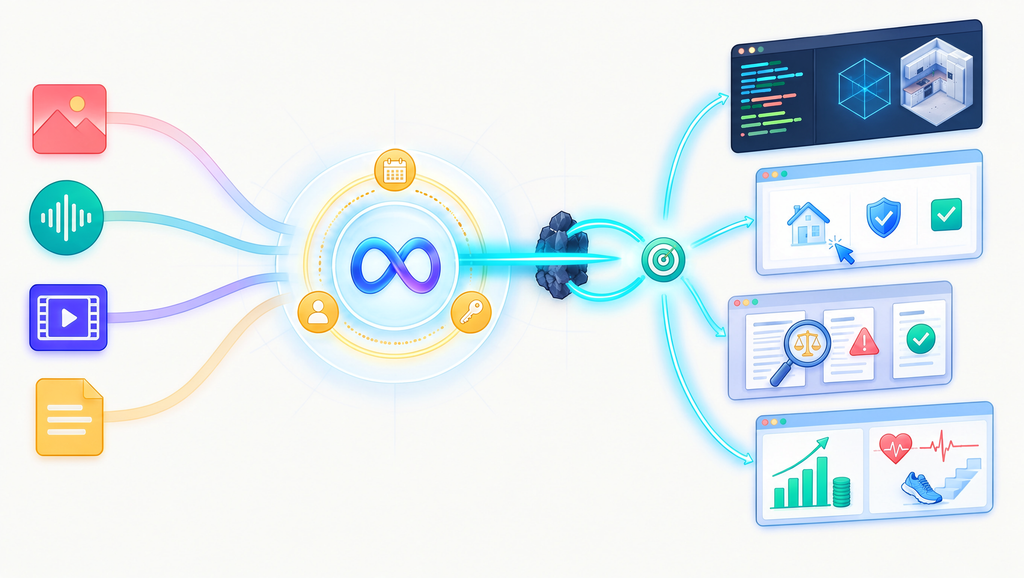
Meta’s own demos show the kind of work Meta Muse Wonder is built for. On Meta’s research blog, the model builds a playable 3D kitchen game from images, designs and orders custom merchandise based on photos from an Instagram profile, and creates a wedding seating chart from complicated matching rules. It also plans a Saturday run route while working directly in a browser and across apps.
Meta also points to expert domains. It tested legal work using Harvey’s Legal Agent Benchmark, which requires following detailed instructions and producing legal work from source documents. Meta says the models bring that ability to problems like understanding a lease or making sense of financial or health information.
Strong fits, based on what Meta has shown:
- Long, multi-step tasks that need memory of earlier details
- Reading and explaining dense documents such as leases, policies, and contracts
- Building apps, tools, and websites over many coding sessions
- Planning tasks with many constraints, such as schedules and seating
Weaker fits right now:
- Anything where a wrong answer has legal or medical consequences without human review
- Tasks needing Wonder Full’s extra capability if you don’t have a Muse Code plan
- Ad campaign management inside Meta’s ad platforms, which Meta hasn’t announced
How Does Meta Muse Wonder Compare to Other Frontier Models?
Meta says Muse Wonder and Wonder Full deliver state-of-the-art results on personal agents, memory, and coding. TechCrunch reports that, in Meta’s own testing, the models score comparably to other leading frontier models, and that Muse Wonder scores highest on MemoryBench, a memory-focused benchmark. Those are vendor numbers, so treat them as a starting point.
Independent testing tells a similar story. DeepLearning.AI’s The Batch reports Artificial Analysis Intelligence Index scores of 56 for Muse Wonder Full and 52 for Muse Wonder, compared with 48 for Meta’s previous flagship, Muse Spark 1.3.
| Model | Access | Independent Index Score* | Best For |
|---|---|---|---|
| Muse Wonder Full | Muse Code subscription | 56 | Hardest coding and agent work |
| Muse Wonder | API and Muse Code | 52 | Agents, documents, memory-heavy tasks |
| Muse Spark 1.3 | API and Muse app | 48 | Faster, cheaper everyday work |
Artificial Analysis Intelligence Index, as reported by DeepLearning.AI. Scores change as new models launch.
For comparisons with other recent models, see our breakdowns of Gemini 4 Argon benchmarks and Claude Haiku 5.5.
Is Meta Muse Wonder Safe to Use With Business Data?
Meta says it trained the Muse Wonder family to avoid sharing private information without permission and to resist misuse. It also says a full report with additional safety evaluations will be available soon, so the complete picture isn’t public yet. Until then, keep sensitive business data out of early tests.
The Muse app has more detailed protections. According to Meta’s Muse announcement, Muse runs on its own dedicated cloud computer called Muse Secure VM, with a separate Sentinel agent that must approve anything Muse sends to the internet. Muse checks with you before sensitive actions like sending an email or making a purchase.
| Protection Meta Describes | Why It Matters for a Business |
|---|---|
| Approval before emails and purchases | Prevents the agent from acting without you |
| Full audit trail of actions | Lets you review what was done and planned |
| You choose which apps it connects to | Limits access to only what’s needed |
| Option to opt out of AI training | Keeps your interactions out of model training |
| Muse data not shared with ad systems | Separates your agent data from Meta advertising |
| “Forget” command for remembered details | Removes information you no longer want stored |
What Does Meta Muse Wonder Mean for Facebook and Instagram Marketing?
Here’s the honest answer: nothing has changed in your ad account yet. Meta has not announced Muse Wonder inside Facebook Ads Manager, Instagram, or WhatsApp Business tools. Its stated plan is to power the Muse app, artifact generation, and future specialized models.
What changes now is the assistant side of marketing. A Muse subscriber could ask the agent to compare quotes, research competitors, organize a promotion calendar, or turn saved Instagram posts into action items. Meta’s demo of designing merchandise from Instagram photos hints at where this could go for brands.
What to do now:
- Keep your Facebook and Instagram profiles complete and accurate, since agents increasingly read public business information.
- Watch Meta’s newsroom for any announcement that brings Muse models into ad tools.
- Don’t rebuild your ad strategy around unannounced features.
- Test the Muse app for planning and research, not for publishing on your behalf.
For practical AI workflows you can use today, see our guides to AI for social media marketing and AI agents for small businesses.
Meta Muse Wonder for Connecticut Businesses
Meta’s own examples line up closely with Connecticut’s economy. Hartford is home to many insurance companies, and Meta specifically names navigating an insurance claim as a target use case. An independent agency could use Meta Muse Wonder through the API to draft plain-English summaries of policy language for clients, with a licensed agent reviewing every word.
Commercial leases are another fit. A shoreline restaurant in Madison or a boutique in West Hartford could use it to flag renewal dates, escalation clauses, and maintenance responsibilities before meeting a landlord. A New Haven startup could use Muse Code to prototype an internal tool before hiring developers.
| Connecticut Business | Practical Use | Human Check Required |
|---|---|---|
| Hartford-area insurance agency | Plain-English policy summaries | Licensed agent review |
| Shoreline restaurant | Lease clause summary before renewal | Attorney review |
| Fairfield County contractor | Organizing bids and supplier quotes | Owner approval |
| New Haven startup | Prototyping an app with Muse Code | Developer code review |
Decision Framework: Should You Use Meta Muse Wonder Now?
Most small businesses don’t need to rush. The right move depends on whether you have a developer, how sensitive your data is, and whether a cheaper model already does the job. Use this table to decide.
| Your Situation | Recommendation |
|---|---|
| No developer, want a personal assistant | Try the free Muse app; wait for Wonder to reach subscribers |
| Developer on staff, building agents or tools | Test Muse Wonder on the API with non-sensitive data |
| Heavy coding work | Consider a Muse Code plan for Wonder Full |
| Simple, high-volume tasks | Start with Muse Spark or another lower-cost model |
| Handling client legal, health, or financial data | Wait for Meta’s full safety report and review terms |
| Want better Facebook or Instagram ads | No change yet; focus on fundamentals |
How to Test Meta Muse Wonder: 7 Steps
A small, controlled test tells you more than any benchmark. These 7 steps keep costs low and risk contained, whether you’re testing through the API or waiting for the Muse app rollout.
- Pick 1 repeatable task, such as summarizing reviews or lease clauses.
- Use non-sensitive or anonymized data for every early test.
- Run the same task on a cheaper model, such as Muse Spark, for comparison.
- Track tokens and cost for each run, including reasoning output.
- Score the results on accuracy, completeness, and time saved.
- Keep a human reviewer on anything that reaches a customer.
- Decide after 2 weeks: adopt, keep testing, or wait for the next release.
How Lorphic Approaches New AI Models
At Lorphic, a digital marketing agency based in Guilford, Connecticut, we test new models like Meta Muse Wonder on real marketing tasks before recommending them to clients. We compare quality and cost against the tools clients already use, and we only add a model to a workflow when it clearly saves time without lowering accuracy.
That testing supports our social media marketing and Facebook Ads work, billed at $15 per hour. If you’re wondering which AI tools actually fit your business, a free consultation is a simple place to start.
Frequently Asked Questions
What is Meta Muse Wonder?
Meta Muse Wonder is a family of 2 frontier AI models, Muse Wonder and Muse Wonder Full, released by Meta on October 12, 2026. They’re designed for AI agents that handle long, multi-step personal and professional tasks.
What is the difference between Muse Wonder and Muse Wonder Full?
Muse Wonder is available through the Meta Model API and Muse Code. Muse Wonder Full is the stronger version and is only available to paid Muse Code subscribers.
How much does Meta Muse Wonder cost?
Muse Wonder costs $4 per million input tokens and $20 per million output tokens on the Meta Model API. Muse Wonder Full is only available through Muse Code plans priced at $50 or $200 per month.
Is Meta Muse Wonder free?
Not through the API, where every request is billed by tokens. Meta says the consumer Muse app is free for most needs, and Muse Wonder will power it first for subscribers.
Can I use Meta Muse Wonder in the Muse app?
Not yet for everyone. Meta says Muse Wonder will soon power experiences in Muse and will roll out first to subscribers.
Does Meta Muse Wonder work with Facebook and Instagram ads?
Meta has not announced Muse Wonder inside Facebook Ads Manager or Instagram ad tools. Its stated focus is the Muse app, developers, and future specialized models.
Conclusion
Meta Muse Wonder marks Meta’s entry into frontier AI, with a clear focus on agents that remember context and finish long tasks. For developers, it’s available now at $4 and $20 per million tokens. For most business owners, the practical step is to watch for its arrival in the Muse app and test it on low-risk tasks first.
Don’t rebuild your marketing around unannounced features, but do keep your public business information accurate as AI agents read more of it. For more AI guides written for business owners, browse the Lorphic blog or read about Google AI Mode for small businesses. If you have questions about using AI in your own marketing, our team is happy to help.
Curated by Lorphic
Digital intelligence. Clarity. Truth.