

Open-weight models are AI models whose trained weights, the files that hold everything the model learned, are published so anyone can download, run, and modify them. On October 1, 2026, Cloudflare and Amazon each released open-weight models of a new kind: decision models that don’t write text at all. Instead, they answer fixed questions, such as yes or no or “which team should handle this?”, and return a probability for each answer. Cloudflare released Clef and Clef-flash, and Amazon’s Strands Labs released Strands Decider 2B, both under the Apache 2.0 license.
These open-weight models are built for one job inside AI systems: making quick, reliable decisions before an action happens.
Open-Weight Models: Key Takeaways
- Open-weight models publish their trained weights so you can run them yourself, but that doesn’t always mean the training data is public.
- Cloudflare and Amazon both released open-weight decision models on October 1, 2026.
- Decision models return probabilities for set answers instead of writing text.
- Cloudflare’s Clef-flash returns decisions in a median of 38.8 milliseconds on Workers AI.
- Amazon’s Strands Decider 2B runs on a local computer and was released with its training data and scripts.
- Neither model can write emails, summarize documents, or chat.
- Best uses: routing leads and tickets, flagging risky actions, and filtering content at very low cost.
Table of Contents
- What Are Open-Weight Models?
- What Did Cloudflare and Amazon Release?
- What Is a Decision Model?
- Cloudflare Clef: Fast Decisions on Workers AI
- Amazon Strands Decider 2B: Decisions on Your Own Computer
- Why Would Cloudflare and Amazon Give Away Open-Weight Models?
- What Can a Small Business Do With These Open-Weight Models?
- Open-Weight Models and Privacy for Connecticut Businesses
- Decision Framework: Which Option Fits You?
- How to Try Open-Weight Decision Models: 6 Steps
- How Lorphic Approaches New AI Tools
- FAQs
What Are Open-Weight Models?
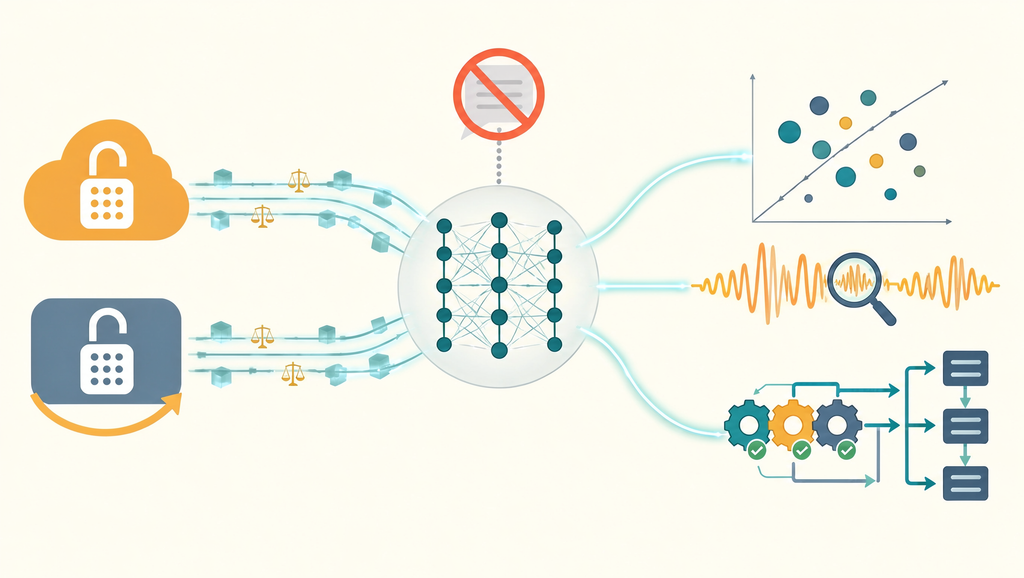
Open-weight models are AI models whose weights are publicly released, usually on Hugging Face, so anyone can download and run them on their own hardware or a cloud of their choice. Weights are the numbers a model learns during training. Releasing them lets businesses inspect, fine-tune, and host the model without depending on the original company’s API.
Open-weight and open-source aren’t the same thing. A fully open-source release also includes the training data and code, so others can rebuild the model from scratch. Amazon’s Strands Decider 2B release includes the training data and scripts, while The Register reported that Cloudflare confirmed Clef’s training datasets aren’t public.
| Release Type | Weights Public | Training Code Public | Training Data Public | Example |
|---|---|---|---|---|
| Closed model | No | No | No | Most frontier chat models |
| Open-weight model | Yes | Sometimes | No | Cloudflare Clef |
| Fully open release | Yes | Yes | Yes | Amazon Strands Decider 2B |
What Did Cloudflare and Amazon Release?
Both companies released open-weight models on the same day, and both built them on top of open Qwen base models from Alibaba. Cloudflare’s changelog introduced Clef (27 billion parameters) and Clef-flash (9 billion), the first models trained by its Workers AI team. Amazon’s Strands Agents blog introduced Strands Decider 2B, a 2 billion parameter model from its experimental Strands Labs project.
The 2 releases target different settings. Cloudflare hosts its open-weight models on its global network and also lets you download them. Amazon designed its model to run locally on a laptop or desktop GPU, so it costs nothing per request.
| Factor | Cloudflare Clef / Clef-flash | Amazon Strands Decider 2B |
|---|---|---|
| Released | October 1, 2026 | October 1, 2026 |
| Size | 27B / 9B parameters | About 2B parameters |
| Base model | Qwen | Qwen3.5-2B |
| License | Apache 2.0 | Apache 2.0 |
| Where it runs | Workers AI or self-hosted | Your own CPU or GPU |
| Training data released | No | Yes |
| Context window | 64K tokens | Not specified |
| Reads images | Yes, up to 4 per request | Not specified |
What Is a Decision Model?
A decision model is an AI model that picks from answers you define instead of writing its own response. You give it a situation, such as a customer message, and a set of questions. It returns a probability for every allowed answer, so your software can act on the result immediately.
Amazon’s launch post explains the trade-off clearly. Decision models are faster and more capable at a given size, and they always return one of the allowed options. In exchange, they’re much worse than reasoning models at complex problems and can’t handle coding, chatbots, or document summaries. These open-weight models follow a format popularized by TypeSafe AI’s Jev, which launched in mid-September 2026.
The 3 question types Clef supports:
- Yes/no (noul): “Is this request urgent?” Returns the probability of yes.
- Choice: “Which team should handle this: billing, technical, or sales?” Returns a probability for each option.
- Score: “Rate this review from 1 to 5.” Returns a probability-weighted score.
| Task | Decision Model | Chat-Style LLM |
|---|---|---|
| Route a support ticket | ✓ Fast, structured | Works, but slower and costlier |
| Flag spam or abuse | ✓ | Works |
| Write an email reply | ✗ | ✓ |
| Summarize a document | ✗ | ✓ |
| Check an agent’s action before it runs | ✓ Ideal | Usually too slow |
Cloudflare Clef: Fast Decisions on Workers AI
Cloudflare built Clef for speed. In its changelog, Cloudflare reports a median latency of 209.3 milliseconds for Clef and 38.8 milliseconds for Clef-flash, compared with 524.1 milliseconds for Jev. Requests run on GPUs across Cloudflare’s network, close to users, which keeps the round trip short.
Cloudflare also reports that a Clef model scores highest on 7 of 10 decision benchmarks. The 2 versions aren’t interchangeable, though. On one intent benchmark, Clef scored 97.43 while Clef-flash scored 66.77, below Jev. On Workers AI, Clef is priced by input tokens only, because it never generates output text. The Register reported Clef at $0.24 per million tokens, and current rates are on Cloudflare’s Workers AI pricing page.
| Benchmark (Cloudflare-Reported) | Clef | Clef-flash | Jev |
|---|---|---|---|
| BFCL (case exact) | 98.47 | 98.76 | 95.75 |
| BANKING77 (macro-F1) | 94.20 | 90.93 | 79.74 |
| CLINC150+OOS (macro-F1) | 97.43 | 66.77 | 89.27 |
| Home appliances (case exact) | 82.95 | 97.73 | 52.27 |
Cloudflare is also offering a reinforcement learning fine-tuning service so businesses can tune Clef for their own workloads. Read the full launch post for training details.
Amazon Strands Decider 2B: Decisions on Your Own Computer
Amazon took the opposite approach with its open-weight models: small, local, and fully open. Strands Decider 2B is about 2 billion parameters, small enough to run on a local CPU or GPU. Amazon reports a median decision time of about 115 milliseconds on an Nvidia RTX 3090, and about 153 milliseconds for small tasks on an M3 MacBook.
Amazon released the code on GitHub and the weights on Hugging Face, including all the training data and scripts. Amazon reports it ranks 3rd of 33 models in its size class for accuracy and calibration on JevBench. Calibration measures how trustworthy a model’s confidence scores are: if it says 80% sure, it should be right about 80% of the time.
What Amazon’s demo shows:
- An AI agent is asked “What’s the weather?” without a location.
- Before the agent calls its weather tool, Strands Decider checks 2 questions: were the arguments actually provided by the user, and is it too early to act?
- Both checks fail, so the agent asks which city you meant instead of guessing.
That pattern, a cheap check before every action, is where these open-weight models are most useful.
Why Would Cloudflare and Amazon Give Away Open-Weight Models?
Both companies sell infrastructure, not chatbots. Releasing open-weight models for free builds trust with developers and pulls them toward the platforms where the models run best. Cloudflare benefits when developers host Clef on Workers AI and buy its fine-tuning service. Amazon benefits when developers build agents with its Strands tools and run their larger models on Amazon Bedrock, which its demo uses.
There’s also competitive timing. Both releases arrived about 2 weeks after Jev’s launch, and both offer compatible or similar interfaces. Free, open alternatives put pressure on paid decision APIs to compete on quality and service rather than access.
| Company | What It Gives Away | What It Hopes to Sell |
|---|---|---|
| Cloudflare | Clef weights under Apache 2.0 | Workers AI hosting, RL fine-tuning, AI Gateway |
| Amazon | Weights, data, and training scripts | Strands agent tools, Amazon Bedrock usage |
What Can a Small Business Do With These Open-Weight Models?
Most small businesses won’t download open-weight models themselves, but the tools they use soon may run on them. Decision models are ideal for high-volume, repetitive choices: sorting messages, flagging spam, and checking whether an automated action should happen. They’re also cheap, because you pay for reading text, not writing it.
Here’s a rough cost example. If a business sends 10,000 lead form submissions per month through Clef, and each one is about 300 tokens, that’s 3 million input tokens. At $0.24 per million, that’s about $0.72 per month. Running Strands Decider 2B locally has no per-request fee at all.
| Marketing or Operations Task | Example Question | Benefit |
|---|---|---|
| Lead routing | “Is this a sales lead, support request, or spam?” | Faster response to real leads |
| Review triage | “Is this review negative and urgent?” | Catch problems quickly |
| Social comment moderation | “Does this comment break our policy?” | Consistent, fast filtering |
| Form qualification | “Is this inquiry within our service area?” | Less time on unqualified leads |
| Agent safety checks | “Should the agent send this email now?” | Fewer automated mistakes |
For a broader look at agents, see our guide to AI agents for small businesses. For review workflows, see our reputation management service.
Open-Weight Models and Privacy for Connecticut Businesses
One of the most practical advantages of open-weight models is control over data. When you run a model like Strands Decider 2B on your own computer, the text you send it never has to leave your office. That matters for Connecticut businesses that handle sensitive information.
Hartford-area insurance agencies, New Haven medical and dental practices, and law firms in Stamford all process messages they’d rather not send to outside services. A local decision model could sort incoming emails or flag urgent requests without sending them to a third-party API. Running a model locally doesn’t by itself make a workflow compliant with HIPAA or other rules, so any sensitive use still needs proper review.
| Connecticut Business | Possible Local Use | Still Needed |
|---|---|---|
| Hartford insurance agency | Sort incoming claim emails by type | Staff review, data policies |
| New Haven dental practice | Flag urgent appointment requests | HIPAA review, staff follow-up |
| Stamford law firm | Route intake forms by practice area | Attorney oversight |
| Shoreline retailer | Filter spam from contact forms | Basic monitoring |
Decision Framework: Which Option Fits You?
Choose based on where you want the model to run, how fast decisions must be, and whether you need text output at all. If you need writing, these open-weight models aren’t the answer.
| Your Situation | Best Fit |
|---|---|
| You need decisions in milliseconds inside a web app | Cloudflare Clef-flash on Workers AI |
| You need the highest decision accuracy | Cloudflare Clef |
| Data must stay on your own hardware | Amazon Strands Decider 2B locally |
| You want to study or retrain the model fully | Amazon Strands Decider 2B (data and scripts included) |
| You already use Jev | Clef, which follows the same System One API |
| You need emails, summaries, or chat | A text-generating LLM, not a decision model |
For text-generating model costs, see our Gemini 4 Argon pricing guide.
How to Try Open-Weight Decision Models: 6 Steps
You don’t need a large engineering team to test these open-weight models, but you do need someone comfortable with basic code or the command line. Start small with real examples from your business.
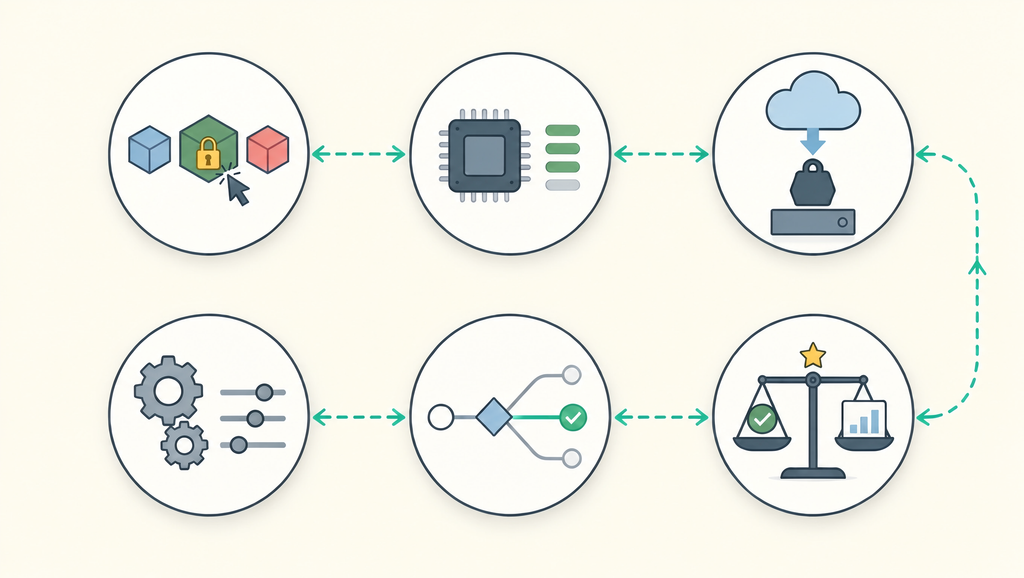
- List 3 repetitive decisions your team makes daily, such as sorting leads or flagging urgent emails.
- Write each as a closed question with fixed answers: yes/no, a list of choices, or a score.
- Collect 50 to 100 real examples with the correct answers marked by a person.
- Run them through a model: install the
strands-deciderCLI with pip for a local test, or call Clef through Workers AI. - Compare accuracy and confidence scores against your marked answers.
- Set a confidence threshold, sending low-confidence cases to a person instead of acting automatically.
How Lorphic Approaches New AI Tools
At Lorphic, a digital marketing agency based in Guilford, Connecticut, we watch releases like these open-weight models for practical uses in client marketing: routing leads faster, catching negative reviews early, and filtering spam from contact forms. We test any new tool on real examples before it touches a client workflow, and a person always reviews decisions that affect customers.
That work supports our social media marketing and reputation services, billed at $15 per hour. If you’re wondering whether AI could speed up your lead handling, a free consultation is a simple place to start.
Frequently Asked Questions
What are open-weight models?
Open-weight models are AI models whose trained weights are publicly released, so anyone can download, run, and modify them. The training data may or may not be public.
What is the difference between open-weight and open-source AI?
Open-weight means the model weights are available. Fully open-source usually also includes the training data and code, as with Amazon’s Strands Decider 2B release.
What is Cloudflare Clef?
Clef is a family of open-weight decision models that Cloudflare released on October 1, 2026. Clef and Clef-flash return probabilities for set answers and run on Workers AI or your own hardware.
What is Strands Decider 2B?
Strands Decider 2B is a 2 billion parameter open-weight decision model from Amazon’s Strands Labs. It runs on a local CPU or GPU and was released with its training data and scripts.
Can decision models write text?
No. Decision models only choose among answers you define and return probabilities. For emails, summaries, or chat, you need a text-generating language model.
Are these open-weight models free to use?
The weights are free under the Apache 2.0 license. Running them on your own hardware has no per-request fee, while Cloudflare charges for hosted use on Workers AI.
Conclusion
The October releases from Cloudflare and Amazon show where open-weight models are heading: smaller, specialized models that make fast, cheap decisions inside larger AI systems. Clef offers speed and hosted convenience, while Strands Decider 2B offers local control and full transparency.
For most businesses, the practical takeaway is simple: the tools you use for leads, reviews, and support may soon make faster and cheaper decisions behind the scenes. For more AI guides written for business owners, browse the Lorphic blog or read about AI for social media marketing. If you have questions about AI in your marketing, our team is happy to help.
Curated by Lorphic
Digital intelligence. Clarity. Truth.